Games I’ve played and worked on this month!
Apologies for the prolonged absence, dear readers – I planned on writing multiple different posts this week, but each one was overlapped by something else. First, I planned on doing an FYC on Mario Wonder. Then I played Cocoon and thought I’d do an FYC on that. THEN I decided it’d be a cool idea to compare Mario Wonder and Cocoon in a combo-FYC, and while I stalled on that idea I worked some more on The Girl with the Guitar.
So now I’m screwing it and just writing a few snippets about everything I’ve done in the past few weeks. In fact, maybe I’ll do this more – it lets me talk about the stuff I’m working on without publishing entire in-depth devlogs.
Skip to the bottom to see some quick Girl with the Guitar updates, or read all the way through to see my thoughts on two of the games I played in the past few weeks!
Super Mario Wonder
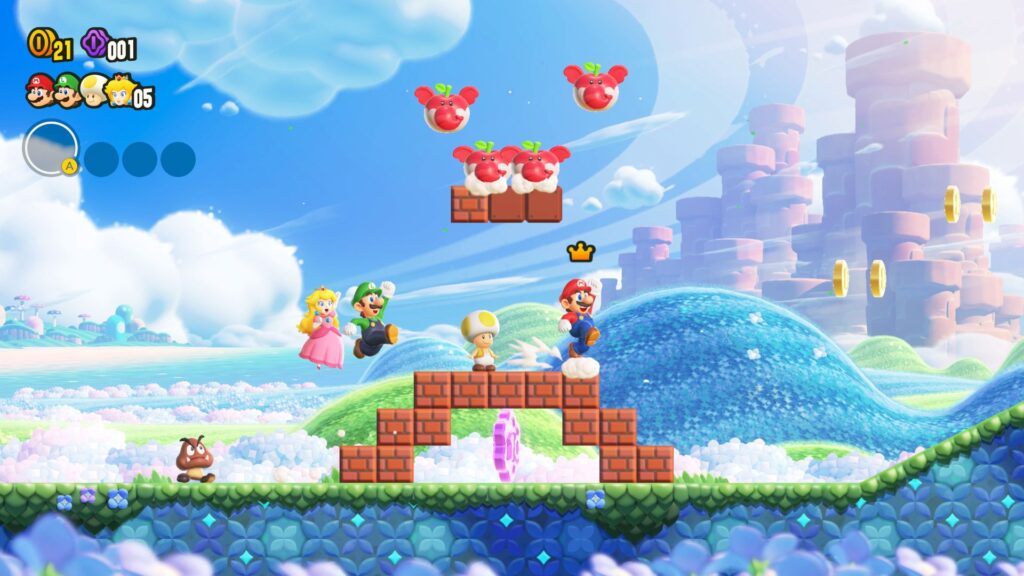
There are those who appreciate the glory of Mario’s various adventures, and then there are losers. I, for one, hope to be more of a winner, and thus I consider myself a big fan of this lowly plumber’s journeys, including his 2002 tropical island extravaganza, his 2007 space-faring galactic adventure, and his 2017 globetrotting mission to get the girl of his dreams.
This year’s Super Mario Wonder is no different in its creativity. Every level differs from the last, each featuring a “Wonder Flower” which dramatically alters the landscape of the current stage.
In this way, Super Mario Wonder thrives in its unpredictability, constantly switching things up. Each world contains a completely different amount of levels. Some worlds, like the obligatory desert stage, feature wide open areas, essentially allowing you to tackle any level. Other worlds are linear series of obstacles. Some worlds are violently threatened by Bowser’s inescapable presence, while others are simple trials testing the worthiness of our starring plumber.
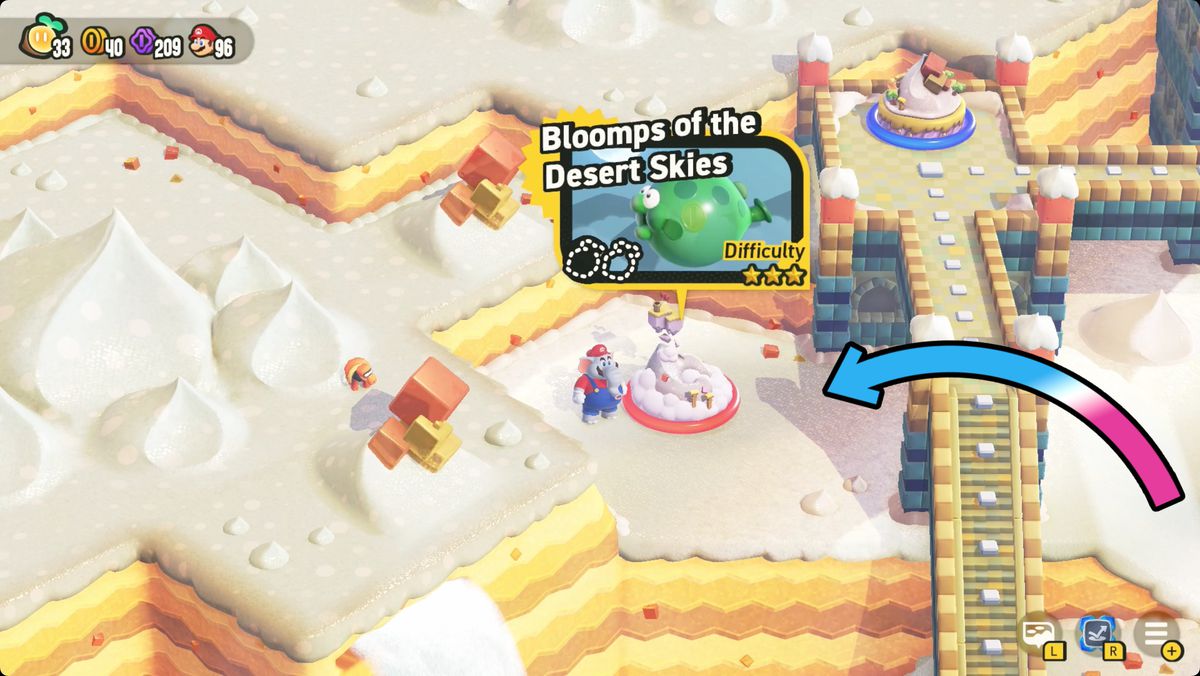
Super Mario Wonder is not without its faults. In my humble opinion, much of the game’s pacing was disrupted by all-but-useless mini-levels with transitions taking longer than the levels themselves.
Nevertheless, Super Mario Wonder does a fantastic job of shaking things up. I promptly took a hint and did the same thing, moving on to my next game of the month…
Cocoon
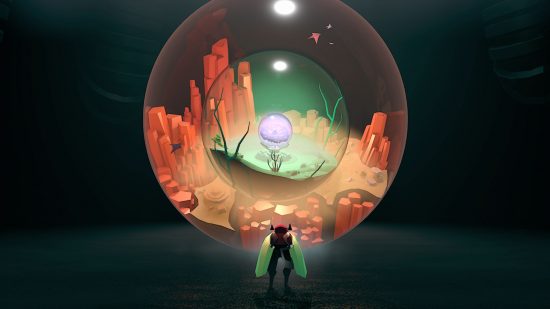
After playing Super Mario Wonder, I moved onto another relatively new indie game: Cocoon.
Okay, FIRST I spent hours trying to get Geforce Now to work on a steam deck so I could play Baldur’s Gate III, but THEN I played Cocoon.
In case you missed its recent debut, Cocoon is a top-down puzzle game in the style of a giant Zelda dungeon. The player can dive into and out of different worlds encapsulated within colored orbs, Men In Black style. It’s got beautiful art, impressive sound design, and lots of surprises up its sleeve.
Cocoon does an incredible job of setting up its own rules and then breaking them. There’s not much detail I can get into here without diving into spoiler territory, but in short, every section of the game is unafraid to introduce a new concept, not by introducing entirely new items or mechanics but rather by forcing you to reconfigure your current tools in new ways.
It’s Nintendo-style development at its finest, writing its instructions in the form of world design rather than words. Without a single written character, Cocoon subtly guides you through four different worlds, providing what can only be equated to revelatory plot twists in the form of new mechanics. For a game without words, there’s a surprising amount of pivotal moments.
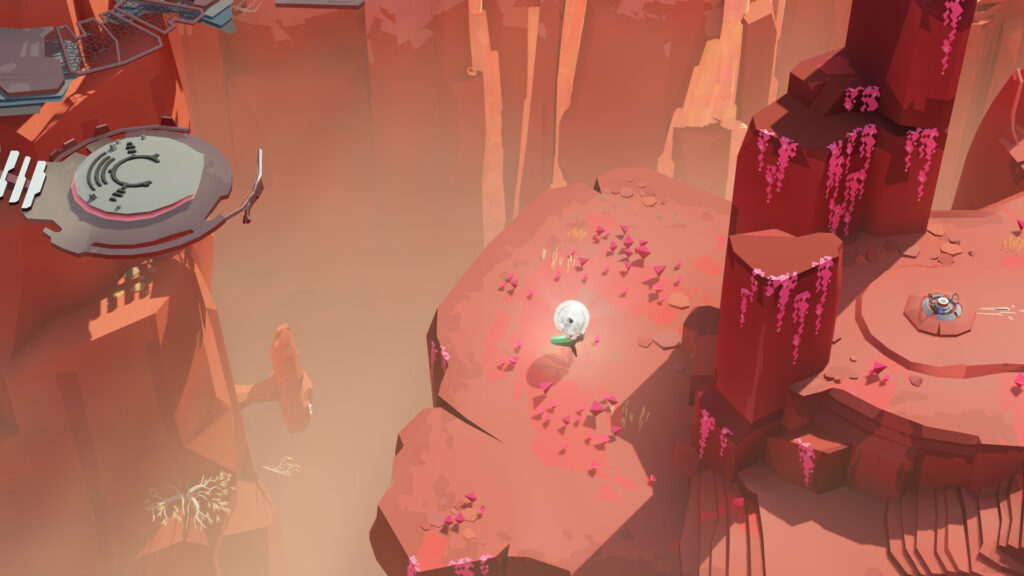
It’s hard to compare Cocoon and Super Mario Wonder, but if Wonder‘s greatest weakness was its pacing, it’s Cocoon‘s greatest strength, each puzzle gracefully falling into the next, no loading screens necessary.
So that’s what I played! Oh, I also watched the new Scott Pilgrim series on Netflix. It was good. Seeing as the Scott Pilgrim comics were an original inspiration for the style of The Girl with the Guitar, I suppose that means I should go back to some designing of my own…
OMG, actually working on Girl with the Guitar?!?!
It’s been a while since I’ve done a lot of concentrated work on The Girl with the Guitar. After finishing my Steam page I’ve found myself caught up in a tide of non-video game work, and I’ve put the game temporarily on the back-burner.
No more waiting, my friends, no more!
I spent much of the late summer working through developing the game’s second chapter (out of three), and now I’m working on the final boss fight of the section.
By the way, expect some spoilers! I’ve got no problems with going in-detail here (if you’ve made it this far, I think you deserve to be more enlightened than others!), but just know that I’ll be discussing some mid-game surprises, so tread carefully!
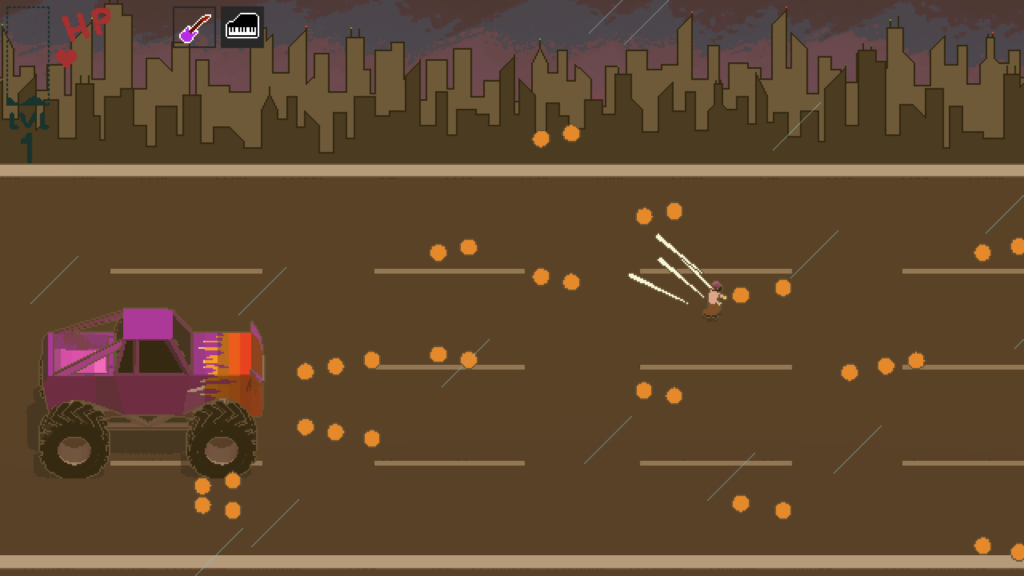
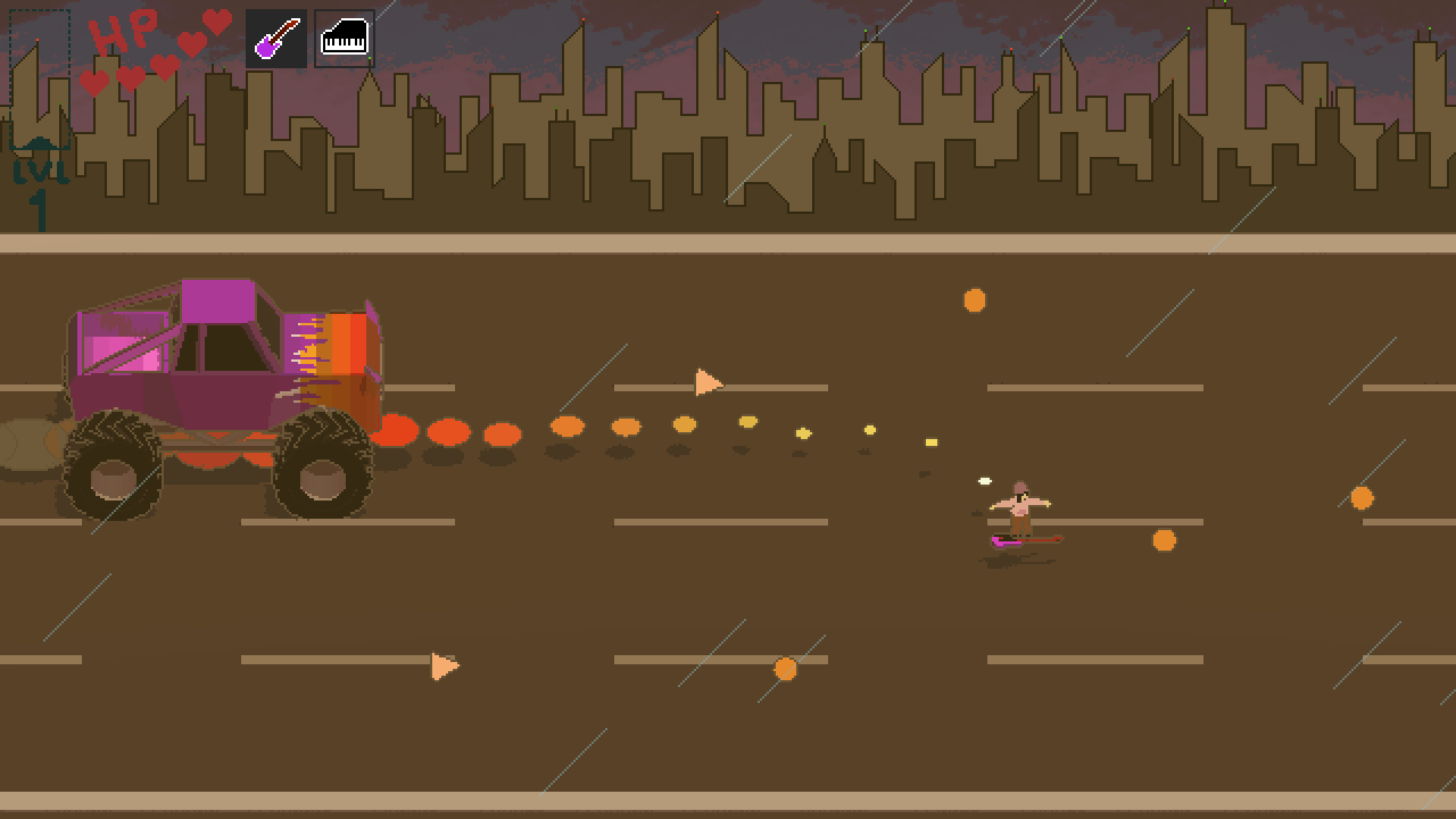
I’ll refrain from giving you the story details (you’ll find out when the game comes out!), but suffice to say, Eve is currently being chased by a monster truck down a four-lane highway in the mid-80s.
A good portion of chapter 2 uses the game systems of chapter 1 for new purposes. And I’m not just talking about the player-experienced gameplay systems… I’m literally talking about writing scripts on top of existing code architecture to create new sections of the game.
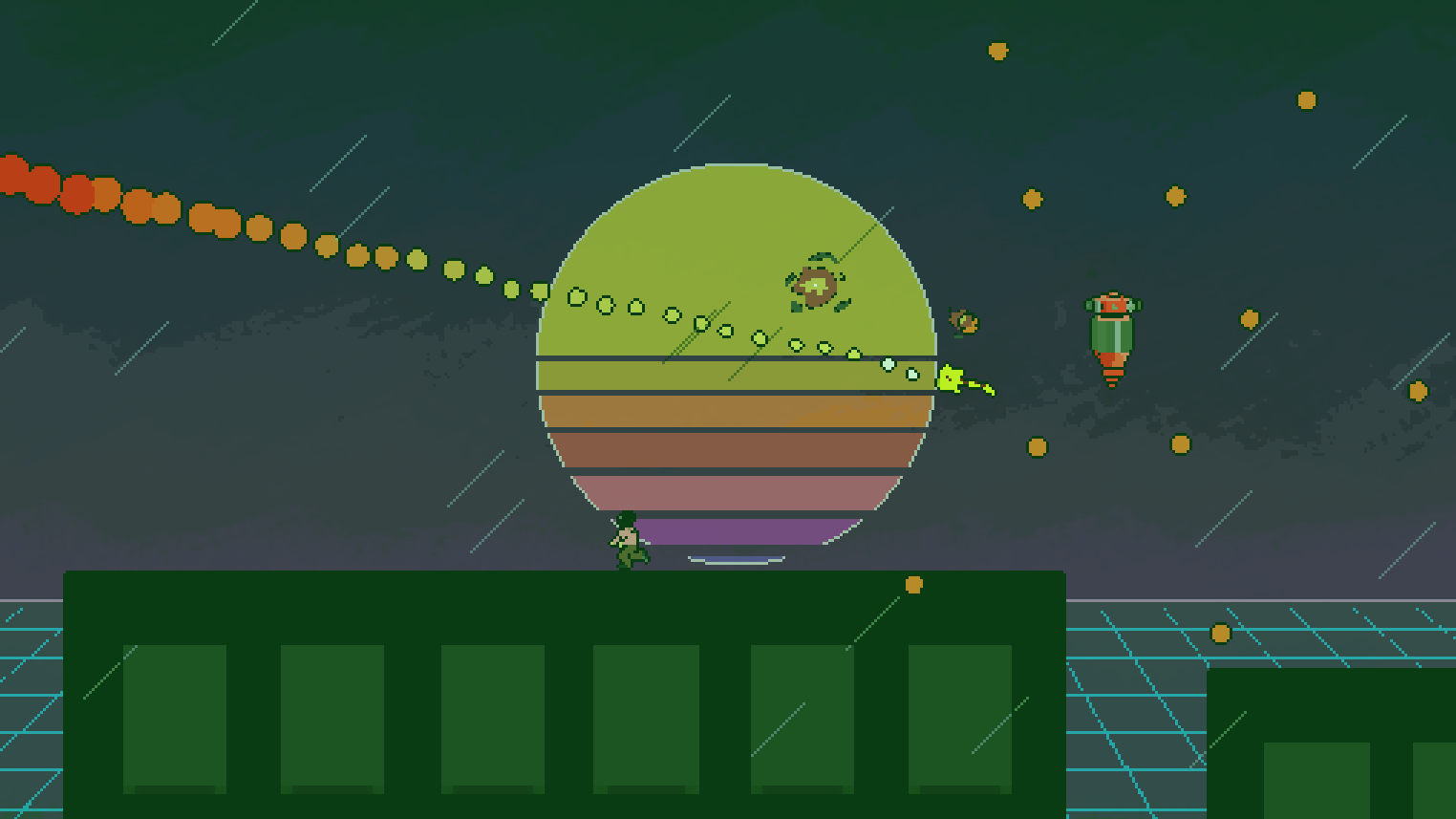
In chapter 2’s opening section, I created a platformer by pointing a camera downwards and using the exact same guitar code so that our weapon of destruction apparently travels in two dimensions on a cross-sectional axis. I even used the same enemy objects, just with some variables tweaked so that they move and shoot from side to side:
The monster truck boss fight is no different. Using the same code, I made an infinitely scrolling road texture under our feet, locked the player in a forward running animation, and used some tween interpolation to allow the player to switch lanes up and down:
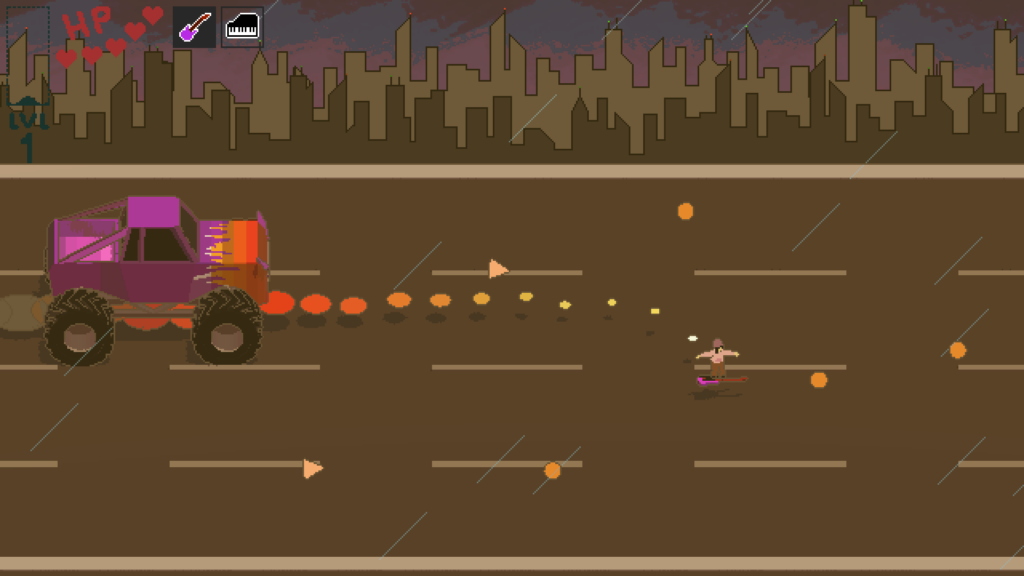
(In the interest of maximizing the coolness factor, I also plopped Eve in a skater position on top of the guitar for phase 2 of the fight. Why only shred in the musical sense when you could do it in the skating sense at the same time?)
Of course, it’s not as simple as making some top-level decisions and calling it a day. I’ve had to tweak a lot of things here and there in order to make the platforming and road sections work correctly. Despite these challenges, it’s still rewarding to have created a flexible system of code architecture which is able to accommodate multiple different game styles. It’s like a top-level engine sitting above the greater Godot engine.
One of these days, I’ll look back into the code of Particle Pandemonium, my first kinda-full game. It was a total mess. An engineer’s nightmare.
For now, those days are in the past. For now. Fingers crossed.
In the meantime, dear readers, please try to avoid being chased by a monster truck down a rainy highway. I know it looks cool, but I promise that you won’t be as successful in real life.
Keep shreddin, and I’ll see you next time!