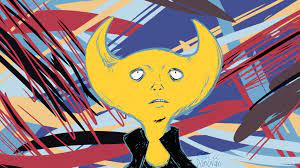
Ah, Hylics. The poster child of weird RPG-maker entries. With its eye-catching art style and sharp, funky music, no wonder it’s risen to the top of the pantheon of crazy indie RPGs.
Hylics has sat atop my to-play list for what’s seemed like years, and yet I simply had never gotten around to it… until now. Recently, I finally booted up the game to see what it was like, turned the lights down low, and found myself thrown into the game’s fever dream, not stopping until the final boss had been slain. And wow, what a time it was.
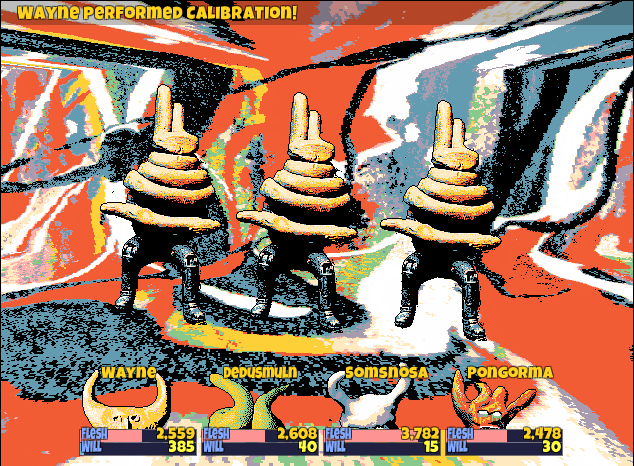
The clearest inspiration for Hylics is, of course, Earthbound, the game which kickstarted the entire wave of weird RPG-maker games, fueling an initial bout of indie creativity which preceded the modern renaissance of metroidvanias and the like. The claymation style of Hylics holds a stylistic resemblance to Earthbound’s promotional art, and the drooping bass and distorted guitar draw immediate comparisons to the SNES classic’s soundtrack.
But there was one other game I kept on thinking about while playing Hylics, a game which I had played quite a while earlier: Hypnospace Outlaw.
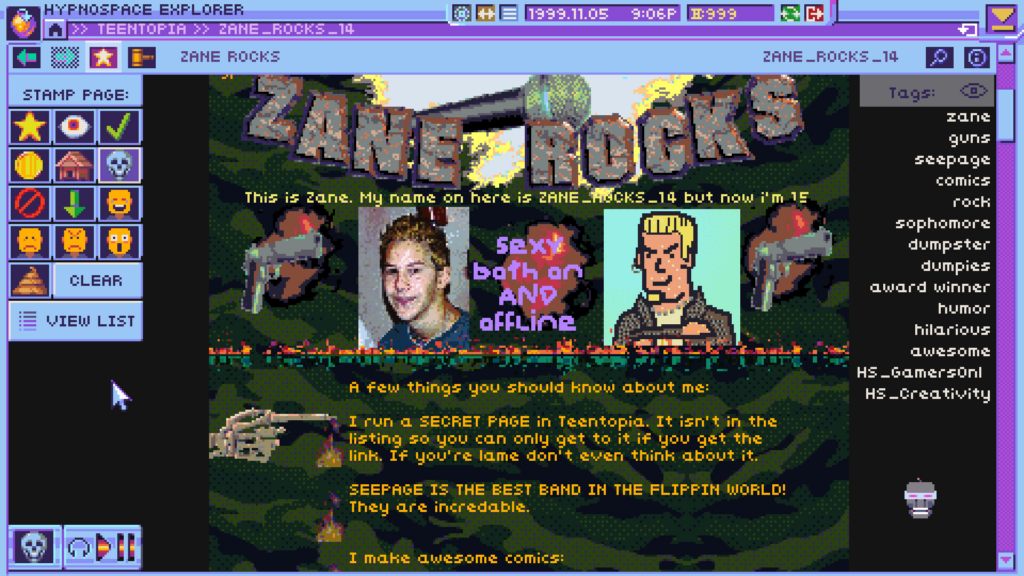
Aside from the “Hy” in the name, Hypnospace Outlaw doesn’t appear to have much in common with Hylics. It’s what can only be described as a 1999 web simulator, with the player (or should I say “user?”) clicking through a surreal internet complete with insane forum posts, community controversies, and an entire story line of web moderation.
Despite these gameplay differences, Hylics and Hypnospace Outlaw are both incredibly surreal experiences which beg to be played at 3 a.m. in one sitting. They both achieve immersion in a similar way: by throwing you into a world so aggressively foreign that you feel completely disconnected from your real surroundings.
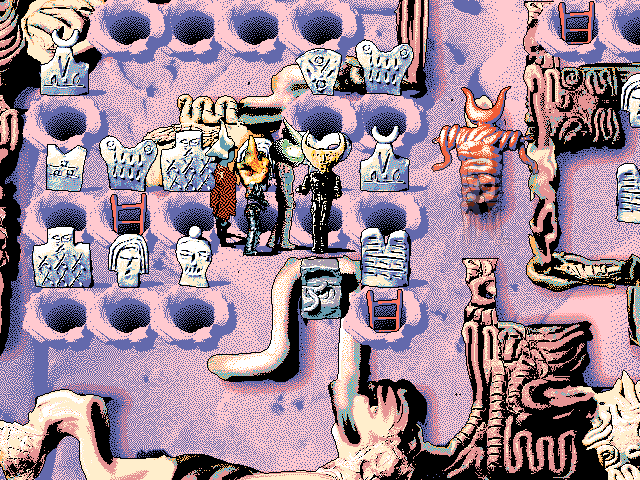
Games are inherently great at immersing you, no matter what you’re playing. They place you within their world, giving you free reign to explore and chart your own memories. I strongly suspect this is a big reason for video games’ heightened nostalgia power – by flinging you, virtually, into a situation and environment, games place the focus of your consciousness into its happenings.
Often, when we speak of game immersion, we are talking about realism. We say that “X game was so immersive, so realistic! I felt like I was there, like it was real!” This is valid – with great graphics come great immersability (yeah, that’s probably not a word… oh well).
But Hylics and Hypnospace Outlaw are about as unrealistic as you can get. Crazy, dreamlike images dance across your brain as you play these games, unabashedly weird music pumping in your ears. These games take immersion in a completely different direction, managing to sweep you entirely away from reality for a full four hours or so.
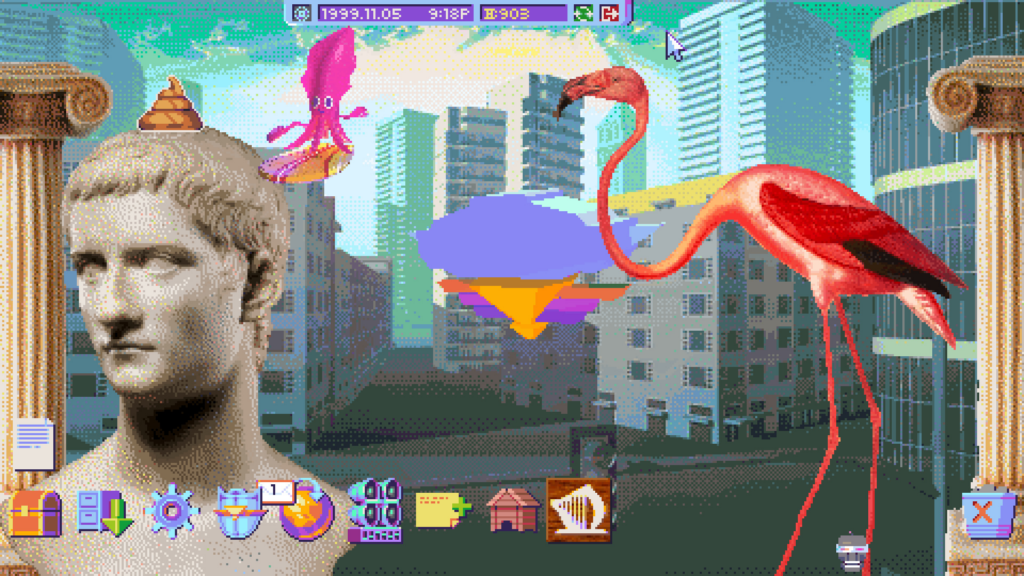
After defeating Gibby, King of the Moon, in Hylics (a fantastic final battle, by the way; I actually found myself having to strategize and I narrowly won on my second attempt), and after completing my final task in Hypnospace Outlaw, I looked around and was jolted back into reality. For hours, my world had been one of claymation, rocket ships, incomprehensible text, and psychedelic battles; of internet cyber bullying, hacking attacks, ear splitting music tastes, and nigh-unreadable fonts. And now, suddenly, I was back.
Playing games like these invites you to look upon the world with new eyes. They are like dreams so vivid that, upon waking up, you need to reorient yourself with reality. When comparing life in the real world to life in the game, one can’t help but notice that both are insane, both are crazy, both are ridiculous…
…and both are pretty darn cool.